



Neuromuscular
Latest News
Advertisement
Latest Videos








CME Content











Advertisement
More News
Neurology News Network for the week of August 13, 2022. [WATCH TIME: 4 minutes]
Take 5 minutes to catch up on NeurologyLive®'s highlights from the week ending August 12, 2022.

The deaths, occurring shortly after treatment infusion, were because of acute liver injury, which is a known risk associated with the Novartis gene therapy.

Mind Moments®, a podcast from NeurologyLive®, brings you an exclusive interview with Olwen C. Murphy, MBBCh; and Matthew R. Vogt, MD, PhD. [LISTEN TIME: 40 minutes]

Here's some of what is coming soon to NeurologyLive® this week.

After recently receiving approval in Canada, AMX0035 looks to join the US market alongside riluzole and edaravone, the only FDA-approved therapeutics that slow disease progression in ALS.
Test your neurology knowledge with NeurologyLive®'s weekly quiz series, featuring questions on a variety of clinical and historical neurology topics. This week's topic is neuromyelitis optica spectrum disorder.
Take 5 minutes to catch up on NeurologyLive®'s highlights from the week ending August 5, 2022.

Alnylam Reports Positive Data on Patisiran in APOLLO-B Trial of ATTR Amyloidosis With Cardiomyopathy
The Alnylam Pharmaceuticals agent, already approved for the treatment of polyneuropathy in those with hATTR amyloidosis, has now shown promise as a therapeutic option for patients with ATTR amyloidosis with cardiomyopathy.
Catch up on any of the neurology news headlines you may have missed over the course of the last month, compiled all into one place by the NeurologyLive® team.
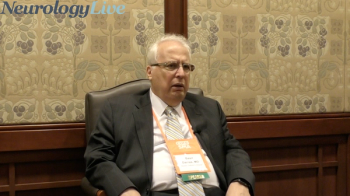
The associate neurologist-in-chief at Boston Children’s Hospital discussed the 4-copy conundrum and whether treatment decisions differ based on SMN2 copies for patients with spinal muscular atrophy. [WATCH TIME: 2 minutes]
Here's some of what is coming soon to NeurologyLive® this week.
Test your neurology knowledge with NeurologyLive®'s weekly quiz series, featuring questions on a variety of clinical and historical neurology topics. This week's topic is the history of the Alzheimer's Association.
Neurology News Network for the week ending July 30, 2022. [WATCH TIME: 4 minutes]
Take 5 minutes to catch up on NeurologyLive®'s highlights from the week ending July 29, 2022.
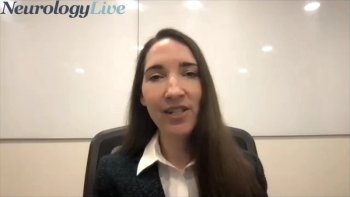
The vice president of clinical development at Biohaven shed light on a newly initiated phase 3 study evaluating a promising agent for patients with all types of spinal muscular atrophy. [WATCH TIME: 2 minutes]
The associate neurologist-in-chief at Boston Children’s Hospital provided insight on the treatment decisions clinicians make for patients with SMA and the challenges with improving optimization. [WATCH TIME: 3 minutes]
The associate neurologist-in-chief at Boston Children’s Hospital discussed the importance of defining and acting on spinal muscular atrophy in its presymptomatic stages. [WATCH TIME: 4 minutes]

In addition to reductions of SOD1 protein, earlier start tofersen demonstrated positive effects in clinical function, respiratory function, muscle strength, and quality of life in patients with SOD1 ALS.
The associate professor of rehabilitation and regenerative medicine at Columbia University Medical Center discussed the ways clinicians go about properly prescribing exercise regimens for patients with spinal muscular atrophy. [WATCH TIME: 3 minutes]
Here's some of what is coming soon to NeurologyLive® this week.
Test your neurology knowledge with NeurologyLive®'s weekly quiz series, featuring questions on a variety of clinical and historical neurology topics. This week's topic is headache and migraine.
Neurology News Network for the week ending July 23, 2022. [WATCH TIME: 4 minutes]
Take 5 minutes to catch up on NeurologyLive®'s highlights from the week ending July 22, 2022.
The associate professor of rehabilitation and regenerative medicine at Columbia University Medical Center provided insight on the tools and gaps in care for assessing physical capacity in patients with spinal muscular atrophy. [WATCH TIME: 4 minutes]
Advertisement
Advertisement
Trending on NeurologyLive - Clinical Neurology News and Neurology Expert Insights
1
Clene Submits NDA Seeking Accelerated Approval for ALS Drug
2
Real-World Data Show Switch to Subcutaneous Ocrelizumab Well Tolerated
3
FDA Accepts Troriluzole NDA Resubmission for Spinocerebellar Ataxia
4
Early Data Show Dual-Targeting CAR-T Agent CTA313 Stabilizes Progressive Multiple Sclerosis
5