




Stroke
Latest News
Advertisement
Latest Videos









CME Content











Advertisement
More News

The study found the approach could be utilized in the intensive care unit without adverse effects on neurological or functional outcomes.

The vascular neurologist at Allegheny Health Network provided an overview of the RapidAI and how it is evolving the way clinicians manage and treat patients who present with stroke. [WATCH TIME: 4 minutes]

Here's what is coming soon to NeurologyLive®.
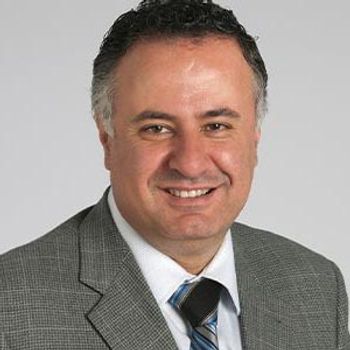
Imad Najm, MD, provided commentary on the long-term efforts needed to understand the origins of neurological brain diseases and his desire to copy the success of the cardiovascular field.
Neurology News Network for the week ending February 19, 2022. [WATCH TIME: 3 minutes]
Take 5 minutes to catch up on NeurologyLive®'s highlights from the week ending February 18, 2022.
The director of Cleveland Clinic’s Epilepsy Center discussed the currently known overlap between neurological diseases and the need to identify causative biomarkers. [WATCH TIME: 4 minutes]

There was no significant association between Black race and clinical outcome following mechanical thrombectomy.
Investigators discovered a total of 23 metabolites that are associated with incident ischemic stroke in women, 4 of which were validated in independent cohorts.

With the physician deficit projected to grow larger within a decade, this global challenge has become a major focus of large organizations and medical societies.
The data safety monitoring board reviewed 90-day outcomes for the first 200 patients, recommending that investigators continue the study as it currently stands.

More than 30% of the lower dose tenecteplase group achieved major reperfusion without symptomatic intracranial hemorrhage at 24 to 48 hours after thrombolysis.
In a time when complex medical communication to the public is on display, the need to ensure patient comprehension is of utmost importance for vascular neurologists.
Here's what is coming soon to NeurologyLive®.

A greater proportion of those treated with EVT had modified Rankin Scale scores of 0-3 at 90 days and NIHSS improvements of at least 8 points or more at 48 hours, relative to standard medical therapy.

For pediatric patients with LVO, 4 out of 5 fulfilled adult thrombectomy selection criteria, aside from age.
Neurology News Network for the week ending February 12, 2022. [WATCH TIME: 3 minutes]
Take 5 minutes to catch up on NeurologyLive®'s highlights from the week ending February 11, 2022.

Investigators found that increased age, greater initial NIHSS score, arrival by EMS, and shorter time to ED arrival all contributed to increased treatment rates.

When compared with warfarin, treatment with DOACs was associated with a favorable safety profile, as well as similar clinical and radiographic outcomes in patients with cerebral venous thrombosis.
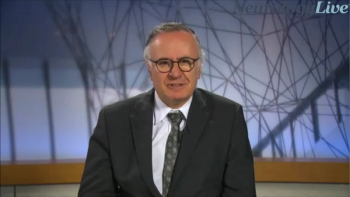
The director of Cleveland Clinic’s Epilepsy Center provided insight on a new 20-year initiative to uncover more about the origins of neurological diseases and how they occur prior to symptom onset. [WATCH TIME: 3 minutes]

The artificial neural network demonstrated an area under the precision-recall curve of 0.92 with recall of 0.72 with precision of 0.39 during testing, all values that were greater than classic regression models.

After small studies suggested eptifibatide may be safe in acute ischemic stroke, new data showed similar rates of ICH between study drug and controls, but increased PH-2 for those treated with the antiplatelet.

Results from the retrospective chart review were presented at the 2020 International Stroke Conference, held in New Orleans and virtually.
Relative to pre-pandemic era, the odds of mortality in stroke-related admissions increased during the pandemic, with an even greater risk for those less than 70 years of age.
Advertisement
Advertisement
Trending on NeurologyLive - Clinical Neurology News and Neurology Expert Insights
1
MDS Congress 2026: Late-Breaking Data Snapshot
2
New Phase 1 Study Tests Intrathecal Gene Therapy Agent INS1201 in Duchenne Muscular Dystrophy
3
Satralizumab Reduces MOGAD Relapse Risk in Phase 3 METEOROID Trial
4
The Road Ahead for Precision Medicine in Multiple Sclerosis
5