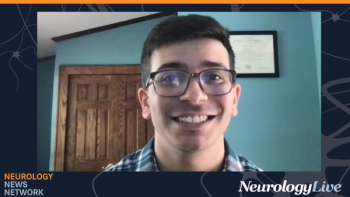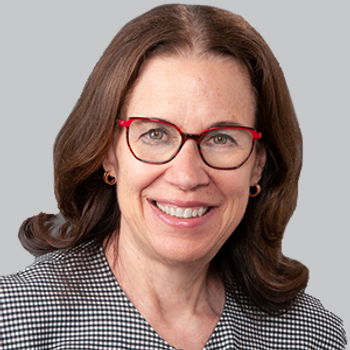
The associate professor of pediatrics and neurology at Rutgers–Robert Wood Johnson Medical School commented on the need to recognize when adolescent patients are ready to learn more about their condition. [WATCH TIME: 5 minutes]

The associate professor of pediatrics and neurology at Rutgers–Robert Wood Johnson Medical School commented on the need to recognize when adolescent patients are ready to learn more about their condition. [WATCH TIME: 5 minutes]

Through 36 weeks of treatment with CNM-Au8, investigators observed a slowing of disease progression and decreased number of participants with a 6-point decline on ALSFRS-R.

An expert discussed the ways the multiple sclerosis community can create change and ultimately improve education on cannabis use.

The director of the Multiple Sclerosis Program at Cleveland Clinic’s Lou Ruvo Center for Brain Health provided context on the EXPAND study, which evaluated treatment efficacy and safety in older and younger patients on siponimod (Mayzent; Novartis).

Investigators interviewed 20 community neurologists about the impact of the pandemic on their professional and personal lives, finding 4 main themes among their responses.

Vikram Bhise, MD, outlined useful questions to include in conversation when discussing the transition to adulthood for patients with pediatric multiple sclerosis.

The professor of neurology at Beth Israel Deaconess Medical Center discussed the treatment potential of melanin concentrating hormone receptor 1 antagonists for narcolepsy. [WATCH TIME: 3 minutes]

In a phase 2/3 setting, AMX0035 demonstrated a 44% lower risk of death for patients with ALS compared to those who started on placebo.

An expert provides the necessary steps needed to bolster accuracy of prescribed disease-modifying therapies for MS and do away with outdated trial-and-error approaches.

Three (20%) patients with Dravet syndrome had increases in seizure frequency after the first vaccine dose; however, no such increase was observed after the second dose.

Vikram Bhise, MD, discussed findings recently presented at CMSC 2021, where teenagers with multiple sclerosis were interviewed to identify perceptions of QOL during the transition to adulthood.

Research on advanced therapies and immune systems have helped clinicians understand more about how to improve treatments for multiple sclerosis.

The founder of Food Matters 365, in Greensboro, North Carolina, commented on the benefits of adding a dietitian to the healthcare team for patients with multiple sclerosis. [WATCH TIME: 3 minutes]

An abnormal composite outcome of death or disability at age 18 to 22 months was found in 46% of those who had seizures during rewarming compared with 25% of those without seizures at rewarming.

An expert provided context on the need to improve awareness and education on cannabis for patients with multiple sclerosis.

Here's what is coming soon to NeurologyLive.


Vocal cord edema, which was observed in 100% of patients with cluster headache, should continue to be explored in research settings, according to the study authors.

Mitchell S. V. Elkind, MD, MS, MPhil, shared his perspective and offered insights into the recent updates from the American Heart Association/American Stroke Association on the landscape of stroke prevention and poststroke care.

Continued improvement in the pharmacodynamics and pharmacokinetics of S1PR modulators, particularly in modulator-receptor selectivity, should improve therapeutic efficacy while reducing the potential for AEs.

Previously, many promising treatments for PD have ultimately resulted in untenable adverse effects or in failure, but the evolving area of protein folding offers an opportunity to slow or reverse the neurodegenerative process.

Neurology News Network for the week ending October 30, 2021.

The associate professor of pediatrics and neurology at Rutgers–Robert Wood Johnson Medical School discussed findings from a qualitative study that aimed at understanding priorities and concerns within this patient population during a transitional period.

Take 5 minutes to catch up on NeurologyLive's highlights from the week ending October 29, 2021.

The registered dietitian at Food Matters 365 in Greensboro, North Carolina, discussed the role nutrition can play in treating comorbidities, sharing her thoughts on popular elimination diets. [WATCH TIME: 2 minutes]

Anna Kratz, PhD, associate professor of Physical Medicine & Rehabilitation, and a research nonclinical psychologist, University of Michigan Medicine, offered insight into the multidisciplinary approach to managing fatigue for patients with multiple sclerosis.

ALSFRS-R and FVC values were stable after cell therapy during the 3-month follow-up; however, the scores and values significantly decreased after 6 months of treatment. The data, the authors noted, warrant future assessments in ALS.

The associate director of the Neuromyelitis Optica Clinic and Research Unit at Mass General spoke about some of the unmet needs and unanswered questions surrounding NMO management.

With the CMSC 2021 annual meeting having wrapped up, the director of the Multiple Sclerosis/MRI Research Group at the University of British Columbia offered his perspective on this year’s conference. [WATCH TIME: 1 minute]

Data presented at CMSC 2021 suggest worse COVID-19 outcomes were associated with patients with neuromyelitis optica spectrum disorder and other comorbidities.