

Among independent variables including DMT group, time from COVID-19 infection, total IgG level, age, sex, obesity, and COVID-19 severity, only the anti-CD20 group was associated with decreased odds of positive serology.
Among independent variables including DMT group, time from COVID-19 infection, total IgG level, age, sex, obesity, and COVID-19 severity, only the anti-CD20 group was associated with decreased odds of positive serology.

The president of the American Heart Association discussed the necessary steps to increase access to systems of care in order to improve health overall, including the integration of telemedicine.
The chief medical officer of Cortexyme discussed the company’s investigational agent atuzaginstat, its mechanism of action, and the findings of the phase 2/3 GAIN trial.

The model discovered nonsequential, overlapping disease progression trajectories, supporting the use of nondeterministic disease progression models.

Cummings and colleagues presented appropriate use criteria for the newly approved Biogen/Eisai agent at the 2021 Alzheimer’s Association International Conference.
A scientific statement and updated guidelines for stroke prevention were both published this year by the American Heart Association and the American Stroke Association; Mitchell S.V. Elkind, MD, MS, MPhil, discusses how the 2 coincide.
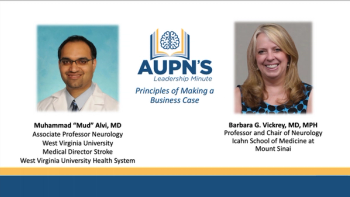
Episode 13 of the AUPN Leadership Minute features Muhammad “Mud” Alvi, MD, of West Virginia University; and Barbara G. Vickrey, MD, MPH, of Icahn School of Medicine at Mount Sinai. [WATCH TIME: 4 minutes]

Investigators analyzed electronic health records from 10,095 participants over a median follow-up period of 31.7 years.
The president of the American Heart Association commented on the integral aspect of collaboration between specialists and providers when it comes to poststroke care.

Efficacy data from a trial examining extended dosing adds to real-world data that demonstrates a significant reduction in the probability of progressive multifocal leukoencephalopathy infection.

Aquestive does not anticipate a need for any additional studies and is preparing for the commercial launch of Libervant in the first half of 2022, if approved.
The president of the American Heart Association spoke on educating primary care physicians about poststroke care for adults, following the publication of new guidelines for care to foster long-term prevention.

Here's what is coming soon to NeurologyLive.

The assistant professor of neurology at Harvard Medical School discussed why there isn’t just a “one size fits all” approach to treating cranial neuralgias.

Of those who reported new or worsening neurological symptoms, 77.8% didn’t require any additional medication to treat their symptoms.

Higher percentages of infants were event-free and were classified as having a motor-milestone response at month 12 than in historical cohorts.
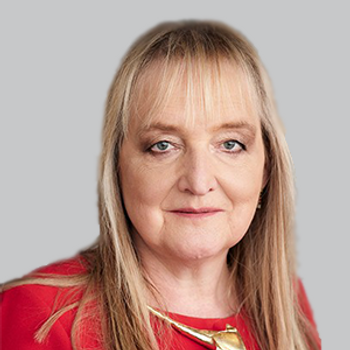
AC Immune, the company presenting the data at the 2021 AAIC meeting, also recently acquired an a-syn vaccine, Affiris PD01.

Phase 1b study results were presented at AAIC 2021, supporting the need for accelerated clinical development of ACI-24 in Alzheimer disease related to DS.
Take 5 minutes to catch up on NeurologyLive's highlights from the week ending July 30, 2021.

Clive Ballard, MD, spoke on the safety data of pimavanserin, which was presented at the 2021 AAIC meeting, held from July 26-30.

The label now includes the use of ultrasound as a muscle localization technique in adults with spasticity, and includes muscles of the elbow, forearm, hand, and thumb.

"Mind Moments," a podcast from NeurologyLive, brings you an exclusive interview with Jessica Zwerling, MD, MS.

The ICARE AD-US trial is expected to enroll 6000 participants, with at least 16% of the population aimed at including those from underrepresented communities. The unrelated confirmatory phase 4 trial is still in the process of being designed.
Clive Ballard, MD, professor of age related diseases at University of Exeter, commented on the potential impact that the approval of pimavanserin would have for patients if approved for dementia-related psychosis.

The effect of methylphenidate on Alzheimer disease apathy was observed at 2 months and was sustained throughout the 6 months of the study.
The assistant professor of neurology at Harvard Medical School provided thoughts on the need to increase awareness on cranial neuralgias and the importance of the diagnostic process for this condition.

Patients with neurological sequelae from COVID-19 were significantly more likely to die before discharge (22.2%) compared with non-neuro-COVID patients (14.4%).

Participants will be enrolled for 18 months, with baseline data provided and compared to the lecanemab phase 2 study cohort.

Investigators found occurrence of DDIs through alterations in cytochrome P450 isoenzyme activity, which can be complicated by genetic polymorphism for metabolic enzymes.

The duo from the Critical Path Institute discussed how CPAD is revolutionizing data collection within the Alzheimer disease community and the advantages it brings to clinicians.