
Clinicians weigh vamorolone vs prednisone/deflazacort for young boys, balancing growth, weight, and adrenal safety during steroid transitions.
Clinicians weigh vamorolone vs prednisone/deflazacort for young boys, balancing growth, weight, and adrenal safety during steroid transitions.
Duchenne care now reaches adulthood—discover when to plan transition, boost teen independence, and find adult clinics that support lifelong needs.
Explore today’s Duchenne muscular dystrophy treatment options, from corticosteroids and givinostat to gene therapy and exon skipping, plus evolving dosing debates.
Clinicians weigh safety, dosing, and combo therapies in Duchenne, balancing infusion burden, ethics, and gene-transfer risks before decline.
In 'Assessing DEA Scheduling and Emerging Therapies in Narcolepsy,' our panel delves into the practical implications of DEA scheduling on narcolepsy treatment decisions, noting that available medications span the scheduling spectrum from unscheduled agents like pitolisant to schedule three oxybates and schedule two stimulants.
The medical director of neurointerventional surgery at Allina Health Brain and Spine Institute provided clinical insights on the procedural factors that guide patient selection for endovascular stroke intervention. [WATCH TIME: 3 minutes]

The senior vice president of clinical development for Lundbeck discusses the mechanism and early clinical promise of Lu AF28996, an oral dual D1/D2 agonist for advanced Parkinson disease. [WATCH TIME: 3 minutes]

Raj Rajaraman, MD, MS, discussed the broad treatment landscape for CDD, highlighting current therapies, neuromodulation, surgical options, and emerging gene-targeted strategies.
Raj Rajaraman, MD, MS, discussed the variable seizure patterns, treatment challenges, and EEG monitoring considerations in patients with CDKL5 deficiency disorder.

Neurology News Network for the week ending April 11, 2026. [WATCH TIME: 4 minutes]
The director of neuromuscular medicine at Marcus Neuroscience Institute shared findings from an analysis presented at MDA 2026 that compared real-world infection rates associated with generalized myasthenia gravis therapies. [WATCH TIME: 8 minutes]
The director of Neuromuscular Medicine at Children’s Hospital of The King’s Daughters discussed the phase 4 RESPOND trial and how add-on nusinersen may improve motor function and biomarker outcomes in patients with spinal muscular atrophy following gene therapy.
The director of the Neurology Residency Program at the Marcus Neuroscience Institute talked about the role of research, patient empowerment, and expanding treatment options in multiple sclerosis. [WATCH TIME: 5 minutes]
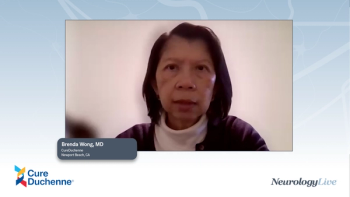
In this discussion, Dr Brenda Wong explores how families can be supported by advocacy organizations after a Duchenne muscular dystrophy diagnosis. She elaborates on how care needs evolve across the lifespan, and how advocacy organizations can help guide multidisciplinary care, treatment decisions, care transitions, and participation in cutting edge DMD research.
Explore today’s DMD treatment toolkit—from steroids and givinostat to gene therapy and exon skipping—plus dosing debates shaping care.
A teen with Duchenne shows how exon-skipping and steroids shape care, while clinicians stress realistic expectations amid varied progression.
In this episode, 'Narcolepsy Treatment Considerations in Pediatric Patients', the experts explore the pharmacologic treatment of narcolepsy in pediatric patients, beginning with a review of FDA-approved options for children. The expert panel notes that the oxybate class, including sodium oxybate, low-sodium oxybate, and once-nightly oxybate, carries approval for excessive daytime sleepiness and cataplexy in patients seven and older, while pitolisant is approved for ages six and up for both indications, including a recently added cataplexy indication. The expert panel clarifies that traditional stimulants and solriamfetol have not been specifically studied or approved for cataplexy treatment.

The chief research officer of the Muscular Dystrophy Association spoke on the FDA's approval of a high-dose regimen of nusinersen and how it fits into an increasingly complex treatment landscape. [WATCH TIME: 11 minutes]
Learn how DMD clinics coordinate neurology, cardio, pulm, rehab and mental health—without overwhelming visits—using nurse coordinators and team huddles.
Clinicians detail modern Duchenne care: essential multidisciplinary teams, access workarounds, and family-centered visits as therapies accelerate.
This episode, titled 'Evaluating Pitolisant and Other Pharmacologic Treatment Options for Narcolepsy,' features panelists discussing the goals of narcolepsy management broadly, stressing that successful therapy extends beyond reducing excessive daytime sleepiness to include addressing cataplexy, hypnagogic hallucinations, sleep paralysis, and the psychological, social, and occupational consequences of the disease.
A neuroimmunology fellow at the Cleveland Clinic shared her experience attending the 2026 ACTRIMS Forum, specifically focusing on the late-breaking data presented in multiple sclerosis.
The director of the Neurology Residency Program at the Marcus Neuroscience Institute discussed the importance of early recognition of invisible symptoms in comprehensive multiple sclerosis care. [WATCH TIME: 9 minutes]
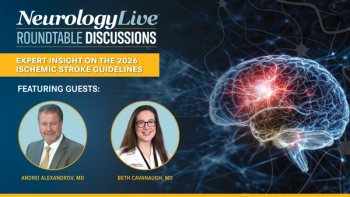
Experts discuss key takeaways in the latest ischemic stroke guidelines, including the transition toward tenecteplase, advances in multimodal imaging, and growing attention to pediatric stroke care. [WATCH TIME: 3 minutes]
Raj Rajaraman, MD, MS, discussed the comprehensive, team-based approach to managing CDD, highlighting the complex interplay of seizures, developmental delays, cortical visual impairment, gastrointestinal issues, and orthopedic concerns.
Raj Rajaraman, MD, MS, emphasized that CDKL5 diagnosis relies on early genetic testing rather than EEG findings, given the absence of a consistent electrographic signature.
Experts debate DEVO and MEVO interventions, exploring emerging approaches in stroke care, the role of advanced imaging, and how evolving evidence may shape treatment decisions. [WATCH TIME: 2 minutes]
Neurology News Network for the week ending April 4, 2026. [WATCH TIME: 5 minutes]
Experts discuss the evolving philosophy of stroke care, highlighting the importance of rapid recognition, advanced imaging, and expanding treatment pathways for patients with suspected stroke. [WATCH TIME: 4 minutes]
A neuroimmunology fellow at the Cleveland Clinic reflected on the 2026 ACTRIMS Forum, highlighting key takeaways in multiple sclerosis research presented in the program. [WATCH TIME: 6 minutes]