



Dementia and Alzheimer Disease
Latest News

Hydromethylthionine Mesylate’s Place as a Potential Tau Aggregator of Alzheimer Disease
By Marco Meglio

FDA Action Update, November 2022: Application Acceptances and a Refusal to File
By Matt Hoffman
Advertisement
Latest Videos



CME Content










Advertisement
More News

Here's some of what is coming soon to NeurologyLive® this week.
Test your neurology knowledge with NeurologyLive®'s weekly quiz series, featuring questions on a variety of clinical and historical neurology topics. This week's topic is Alzheimer disease and related dementias.

Neurology News Network for the week ending December 10, 2022. [WATCH TIME: 4 minutes]
As the treatment paradigm for neurologic diseases rapidly progresses, the need for more thorough biomarker tools to measure disease progression and severity has increased, and in recent years, GFAP has emerged as a valuable candidate to add to the existing panel.
Take 5 minutes to catch up on NeurologyLive®'s highlights from the week ending December 9, 2022.

The Elecsys pTau181 and Abeta42 cerebrospinal fluid assays achieved 90% concordance with amyloid PET scans, according to Roche’s announcement. The assays are approved for use with the cobas fully automated immunoassay analyzers.
The chief medical officer of Alzheon provided perspective on new phase 2 findings assessing the investigational agent ALZ-801 in patients with early Alzheimer disease and a genetic predisposition. [WATCH TIME: 5 minutes]

Percentage of daily energy from ultraprocessed food was associated with cognitive decline in participants younger than 60 years, suggesting the importance of preventive interventions in middle-aged adults.
The professor of dementia and executive dean of the Faculty of Health at the University of Plymouth provided perspective on the way to attack Alzheimer agitation and why drug solutions often fall short. [WATCH TIME: 3 minutes]
The director of the Comprehensive Center for Brain Health at the University of Miami Miller School of Medicine detailed the need for improved biomarkers of dementia with Lewy bodies and whether research in Alzheimer disease helps propel the field. [WATCH TIME: 3 minutes]
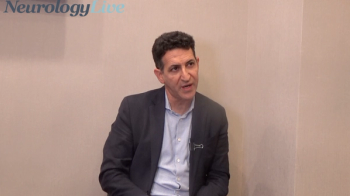
The behavioral neurologist at the Barrow Neurological Institute detailed the significance of low rates of ARIA found in lecanemab, and the direction of anti-amyloid therapies in the future. [WATCH TIME: 4 minutes]
The professor of dementia and executive dean of the Faculty of Health at the University of Plymouth provided perspective on the SYMBAD trial, and eliminating the use of mirtazapine and carbamazepine as medications to treat Alzheimer agitation.
Here's some of what is coming soon to NeurologyLive® this week.
Test your neurology knowledge with NeurologyLive®'s weekly quiz series, featuring questions on a variety of clinical and historical neurology topics. This week's topic is the history of the American Epilepsy Society.
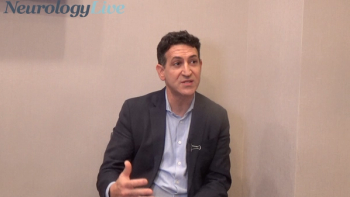
The behavioral neurologist at the Barrow Neurological Institute provided perspective on the safety profile of lecanemab and the importance of a low incidence of amyloid-related imaging abnormalities. [WATCH TIME: 3 minutes]

Over a 12-week treatment period, investigators found no significant differences in mean Cohen Mansfield Agitation Inventory scores between mirtazapine and placebo, with similar rates in adverse events.
Neurology News Network for the week ending December 3, 2022. [WATCH TIME: 3 minutes]

The senior research scientist at the Institute for Systems Biology spoke about changing the perception of clinical trials for Alzheimer disease research based on the COCOA trial presented at the 2022 CTAD conference. [WATCH TIME: 2 minutes]
Take 5 minutes to catch up on NeurologyLive®'s highlights from the week ending December 2, 2022.

Across 3 trials in patients with Alzheimer disease agitation, brexpiprazole doses of 2 or 3 mg/day was safe and showed a statistically significant improvement vs placebo in agitation.
The director of the Comprehensive Center for Brain Health at the University of Miami Miller School of Medicine discussed the treatment differences and unmet needs between dementia with Lewy bodies and Alzheimer disease. [WATCH TIME: 4 minutes]
The senior research scientist at the Institute for Systems Biology spoke about his presentation on multimodal clinical and lifestyle interventions that improve cognitive outcomes at the 2022 CTAD conference. [WATCH TIME: 4 minutes]
Over a 12-week treatment period, irsenontrine was well tolerated across both amyloid positive and negative patients, with no significant difference in pharmacodynamic responses or change in central nervous system biomarkers.

Results from a longitudinal study suggest that higher proportions of subjective memory decline are associated with insomnia disorder in middle-aged and older adults.
The president and chief executive officer of INmune Bio detailed the mechanistic advantages of XPro1595 as a potentially therapeutic benefit for patients with Alzheimer disease and dementia. [WATCH TIME: 5 minutes]
Advertisement
Advertisement
Trending on NeurologyLive - Clinical Neurology News and Neurology Expert Insights
1
FDA Accepts Troriluzole NDA Resubmission for Spinocerebellar Ataxia
2
Real-World Data Show Switch to Subcutaneous Ocrelizumab Well Tolerated
3
Advances in Spinal Cord MRI for Multiple Sclerosis: Julien Cohen-Adad, PhD
4
CALLIPER Extension Data Show Sustained Disability Outcomes With Vidofludimus Calcium in Progressive MS
5