


MS and Demyelinating Disorders
Latest News
Advertisement
Latest Videos






CME Content











Advertisement
More News

The head of the MS center at University Hospital Basel provided insight on the role of BTK inhibitors and how the multiple sclerosis community views the potential of neurofilament light as a key biomarker of neurodegeneration. [WATCH TIME: 3 minutes]

Here's what is coming soon to NeurologyLive®.
Test your neurology knowledge with NeurologyLive®'s weekly quiz series, featuring questions on a variety of clinical and historical neurology topics. This week's topic is Alzheimer disease and dementia.

At least 2 weeks following Evusheld injection, all 18 patients included in the cohort had the highest level of antibody response.
Take 5 minutes to catch up on NeurologyLive®'s highlights from the week ending June 24, 2022.
The associate neurologist at Brigham and Women’s Hospital provided insight on the current state of promising targets in progressive MS and why anti-CD3 therapy might be a new consideration for future trials. [WATCH TIME: 2 minutes]

Expert neurologists emphasize the importance of conversations around patient lifestyle, mental health, and comorbid conditions as keys to improve care for MS.
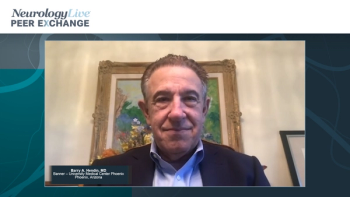
Barry A. Hendin, MD; Regina Berkovich, MD, PhD; and Ahmed Z. Obeidat, MD, PhD, explore the role of biomarkers, precision medicine, and repair mechanisms to improve treatment of MS going forward.

Regina Berkovich, MD, PhD, and Barry A. Hendin, MD, review potential use of BTK inhibitors in the treatment of MS.

A trio of experts in multiple sclerosis exchanges their thoughts on the use of the sphingosine-1 phosphate modulating class of medicines in treating the disease. [WATCH TIME: 3 minutes]

A trio of experts in multiple sclerosis exchanges their thoughts on the gains that have been made in the understanding of the progressive phases of the disease. [WATCH TIME: 3 minutes]

More than $5.2 million in new, unused DMTs were collected from patients with MS over the course of 1 year—from only 1 neuroimmunologist.

A trio of experts in multiple sclerosis exchanges their thoughts on the importance of patient-reported outcomes in the management of patients with the disease. [WATCH TIME: 3 minutes]

The associate neurologist at Brigham and Women’s Hospital provided background on a new case study of a patient with progressive MS who showed positive outcomes using foralumab, an anti-CD3 targeting agent. [WATCH TIME: 3 minutes]
The president and chief executive officer of Mapi Pharma discussed the positive phase 2 findings of a new formulation of glatiramer acetate to treat progressive forms of MS, as well as the long-term plans for the drug. [WATCH TIME: 5 minutes]

After 24 weeks of treatment, the adjusted mean annualized relapse rates were 0.53 with placebo vs 0.39 and 0.48 for the 30- and 45-mg groups of IMU-838.
Here's what is coming soon to NeurologyLive®.
Test your neurology knowledge with NeurologyLive®'s weekly quiz series, featuring questions on a variety of clinical and historical neurology topics. This week's topic is movement and related disorders.
Take 5 minutes to catch up on NeurologyLive®'s highlights from the week ending June 17, 2022.
Expert neurologists comment on the impact of COVID-19 on telemedicine and MS treatment selection.

In the comparator study between ponesimod and teriflunomide, the risk of both 12- and 24-week confirmed disability accumulation at week 108 was significantly different between MAGNIMS score groups.
Clinical implications from VELOCE, a phase 3b study examining the effect of ocrelizumab on immune responses in patients with relapsing MS.

Meghan Garabedian, CRNP, MSN, nurse practitioner at the Penn Neuroscience Center, discussed her presentation at the 2022 CMSC Annual Meeting regarding the patient experience on diroximel fumarate.
The associate professor at the North Carolina Agricultural and Technical State University provided insight on the widespread feasibility of a new initiative that aims to teach and attract young professionals to the MS field. [WATCH TIME: 4 minutes]
The associate neurologist at Brigham and Women’s Hospital discussed the potential of a nasal anti-CD3 monoclonal antibody, foralumab, and its impact on biomarkers specific to patients with progressive multiple sclerosis.
Advertisement
Advertisement
Trending on NeurologyLive - Clinical Neurology News and Neurology Expert Insights
1
Incorporating the Updated AAN/AHS Migraine Prevention Guideline Into Practice
2
Machine Learning Spots Early Signs of MS and NMOSD Years in Advance
3
World Stroke Day 2026: Closing the Gap Between Stroke Onset and the Emergency Call Number
4
Blood-Based Biomarkers for Monitoring Treatment Response in Multiple Sclerosis
5