


MS and Demyelinating Disorders
Latest News
Advertisement
Latest Videos




CME Content






Advertisement
More News

Investigators used statistical analysis to evaluate the effectiveness of the treatment method, with results indicating it could be a viable method for patients with MS.

Multivariable logistic regression models found age to be the only characteristic associated with the risk of CELs at baseline in all datasets, with a higher age associated with a lower risk of CELs.

Microvesicles excellently discriminated between the relapsing-remitting MS and control groups and between radiologically isolated syndrome and unspecific brain lesions.

The professor of neurology at Mayo Clinic College of Medicine discussed which biomarkers have shown the most relevancy in NMOSD and which deserve more attention.

Program chairs Fred D. Lublin, MD, and Stephen Silberstein, MD, offer insight into the third annual IFN meeting, which is set for September 17-18, 2021, to be held in a virtual setting.

Here's what is coming soon to NeurologyLive.

The professor of neurology at Mayo Clinic College of Medicine discussed several areas within the neuromyelitis optica spectrum disorder that are of interest for ongoing and new research efforts.

Patients with AQP4+NMOSD with long cord lesion showed higher annualized atrophy rate of normalized grey matter volume compared with those without long cord lesion.
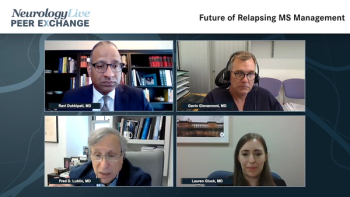
Key opinion leaders in multiple sclerosis (MS) discuss the future of relapsing MS management and unmet needs.
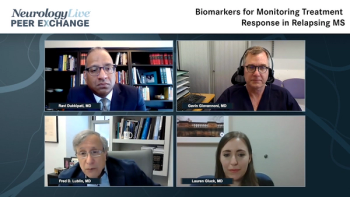
Expert neurologists discuss current and future biomarkers relevant to relapsing multiple sclerosis including cerebrospinal fluid neurofilament.

The director of the Corinne Goldsmith Dickinson Center for Multiple Sclerosis at Mount Sinai Medical Center spoke on what he is looking forward to at the 2021 International Congress on the Future of Neurology.
Take 5 minutes to catch up on NeurologyLive's highlights from the week ending August 13, 2021.
The professor of neurology at Mayo Clinic College of Medicine discussed the 3 currently FDA-approved agents for NMOSD and other agents currently within the clinical pipeline.
The professor of neurology at Mayo Clinic College of Medicine discussed lesser-known facets of NMOSD and how the disease evolves over time.
The professor of neurology at the Mayo Clinic College of Medicine detailed the strides made in recognizing NMOSD as its own disease, along with specific biomarkers that identify it.
Here's what is coming soon to NeurologyLive.
A panel of experts emphasize the importance of shared decision making in relapsing multiple sclerosis and discuss lifestyle choices that impact the disease.
Experts in multiple sclerosis (MS) discuss key factors involved in the sequencing of therapies for relapsing MS.

Neurology News Network for the week ending August 7, 2021.
Take 5 minutes to catch up on NeurologyLive's highlights from the week ending August 6, 2021.

Homeostatic equilibrium was achieved with CNM-Au8 across essential energetic metabolites, including adenosine triphosphate, intracellular phosphorous, phosphocholine, and phosphorylation potential index.

The professor of neurology at the Mayo Clinic College of Medicine discussed the need for evaluating infection risk of disease-modifying therapies amid a growing MS treatment landscape.

Among independent variables including DMT group, time from COVID-19 infection, total IgG level, age, sex, obesity, and COVID-19 severity, only the anti-CD20 group was associated with decreased odds of positive serology.

Efficacy data from a trial examining extended dosing adds to real-world data that demonstrates a significant reduction in the probability of progressive multifocal leukoencephalopathy infection.
Here's what is coming soon to NeurologyLive.
Advertisement
Advertisement
Trending on NeurologyLive - Clinical Neurology News and Neurology Expert Insights
1
uniQure Submits BLA for Gene Therapy in HD, AAN, AHS Issue Updated Guideline on Migraine Prevention, CTE Prevalence, Brain Donation Findings in Former NFL Players
2
American Academy of Neurology, American Headache Society Issue Updated Guideline on Migraine Prevention
3
uniQure Submits BLA for Gene Therapy in Huntington Disease
4
FDA Approves Zilganersen, First Treatment for Alexander Disease
5