
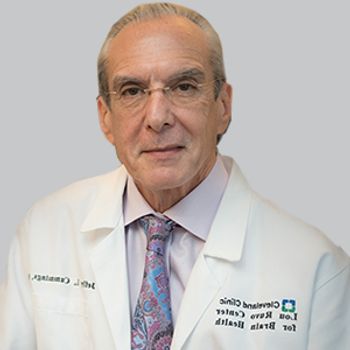
The post hoc analysis pooled data from 3 trials to evaluate the benefits of adding memantine to treatment with cholinesterase inhibitors for patients with moderate to severe Alzheimer disease.
The post hoc analysis pooled data from 3 trials to evaluate the benefits of adding memantine to treatment with cholinesterase inhibitors for patients with moderate to severe Alzheimer disease.
Although animal models and early phase studies suggested some potential for the hypertension medication to slow disability progression in Parkinson disease, a phase 3 assessment showed a lack of treatment effect.

Interim results of the phase 1/2 study show statistically significant reductions in SOD1 protein levels in cerebrospinal fluid, suggesting lower concentrations in the brain and spinal cord, as well.

In patients with Dravet syndrome who had discontinued an average of 4 antiepileptics drugs, while taking a mean of 3, cannabidiol reduced the incidence of seizures almost in half in doses of both 10 mg/kg and 20 mg/kg per day.
Changes in MS diagnostic criteria and the availability of highly effective DMTs has deemed the risk for postpartum relapse nearly irrelevant for the majority of patients with MS.
Researchers found that cognitively unimpaired patients with apneas had an average of 4.5% higher levels of tau in the entorhinal cortex than those who did not have apneas, after controlling for several other factors.
While the overall link is only suggestive, new findings from a preliminary study have implied that there may be a link between sugar-sweetened beverage consumption and a higher disability status in MS.

The senior preclinical and clinical imaging scientist at the National Institute of Neurological Disorders and Stroke spoke about the potential of the central vein sign to help improve the time to an accurate diagnosis in MS.
The senior preclinical and clinical imaging scientist at the National Institute of Neurological Disorders and Stroke gave a presentation on a volumetric segmented echo-planar-imaging (3D-EPI) sequence, which could be used to detect novel biomarkers such as the central vein sign rapidly.
The Professor in UCLA's Department of Neurology and Director of the UCLA MS Program spoke about disease-modifying therapies that would complement anti-inflammatories by targeting neurodegenerative processes.

The Senior Vice President for Research and Training at Kessler Foundation spoke about research he and colleagues have developed at the Kessler Foundation to aid with cognitive problems in persons with MS.
The Professor in UCLA's Department of Neurology and Director of the UCLA MS Program stressed the importance of basing research on clinical observations, understanding them in the lab, then designing novel clincal trials.
The neurologist at Cleveland Clinic Mellen MS Center spoke about the issues in multiple sclerosis that need to be addressed.
The Senior Vice President for Research and Training at Kessler Foundation discussed the results of the SUNBEAM trial, which indicated that ozanimod resulted in sustained improvement in cognitive processing speed, supporting its efficacy in relapsing MS.
The multiple sclerosis specialist at the Corinne Goldsmith Dickinson Center for MS at Mount Sinai spoke about improving a patients' quality of life through symptom management.
The immunology expert from the University of Sherbrooke shared her insight about where she sees the future of MS research headed, and the need to focus attention on the body’s innate immune response.
The director of the multiple sclerosis research unit at Ottawa Hospital spoke about the results of BENEFIT 15 that support early intervention of interferon beta-1b treatment at or shortly after CIS.

The research assistant at the University of British Columbia-Vancouver detailed the success of myelin water imaging in the spinal cords of both healthy controls and patients with multiple sclerosis.

The multiple sclerosis specialist at the Corinne Goldsmith Dickinson Center for MS at Mount Sinai spoke about risk mitigation in patients with MS and why it's important to choose medicines in an effective way.
The director of the multiple sclerosis research unit at Ottawa Hospital spoke about the need for clinicians to select the right patient for the right treatment in the MS clinic.
The Global Head of Neuroimmunology at Genentech discussed the results of a substudy that found that the use of advanced imaging metrics in MS clinical trials may provide specific information about tissue damage and potential repair.

The therapeutic head of neuroinflammation and pain at Novartis spoke about his desire to work to a point where physicians can use NfL to monitor disease activity, make therapeutic decisions, and give perspective to patients.

The staff neurologist at Cleveland Clinic's Mellen Center spoke about his clinical experience in switching patients from their current disease-modifying therapy to ocrelizumab.

Gharagozloo spoke about the early phase model of MS she and her colleagues developed to explore the use of Nlrx1, a mitochondria-located innate immune sensor, in CNS inflammation.
The postdoctoral scholar at the University of California, San Francisco, spoke about a prognostic marker that can be used to study the role of genetic, epidemiologic and immune variables on MS, and to measure the long-term impact of treatment in clinical trials.
The professor of neurology at Harvard Medical School spoke about the long-term correlations between neurofilament light chain and MS outcomes.

The Postdoctoral Scholar at the University of California San Francisco spoke about a longitudinal study that evaluated the utility of spinal cord atrophy measured from brain scans as a surrogate marker for impending conversion to secondary progressive MS.
The staff neurologist at the Mellen Center shared the findings from a poster the group presented from the cohort of patients in which they evaluated quantitative MRI.
The staff neurologist at Cleveland Clinic's Mellen Center spoke about the real-world observational study of the primary-progressive MS treatment.
The staff neurologist at Cleveland Clinic's Mellen Center spoke about re-examining patient-reported outcomes to better understand the quality of life of patients and how it can affect clinical care.