We kindly ask you to share 5 minutes of your time with us in order to help us better craft our content to meet your needs.
We kindly ask you to share 5 minutes of your time with us in order to help us better craft our content to meet your needs.
The Genio system offers bilateral stimulation of the hypoglossal nerve branches, which may lead to potentially greater airway opening for patients with obstructive sleep apnea.
The treatment can be used in children who do not respond well to anticholinergic medications.
The neurologist from Cleveland Clinic discussed how her study reinforced previous findings that individuals with early onset neuromyelitis optica spectrum disorders are more likely to experience severe vision loss.

While patients with relapsing-remitting MS were found to benefit more from aHSCT, patients with progressive MS still experienced stability in disability scores.
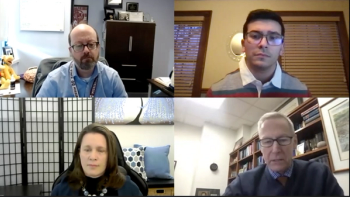
A roundtable discussion featuring Scott Perry, MD, Orrin Devinsky, MD, and Tracy Salazar, PhD, covers the staggeringly low percentage of adults with epilepsy who have seizure action plans.

The duo from Vanderbilt University shared background on their recently published study that found novel associations between functional seizures, cerebrovascular disease, and other psychiatric disorders.
The eXciteOSA device is a daytime therapy that uniquely targets the root cause of snoring and mild obstructive sleep apnea by using electrical currents to stimulate and improve muscle function in the mouth and tongue.
The Endowed Chair in Pediatric Neuromuscular Disorders and professor of clinical pediatrics and neurology, at Children’s Hospital Colorado discussed the future of SMA treatment.

Despite significant improvements in Dravet syndrome, non-statistically significant reductions were observed in children with Lennox-Gastaut Syndrome.

Data from a small study showed patients experienced significant improvements in MDS-UPDRS III scores after 4 months of treatment with single-hemisphere FUS.

Lisa Belter, MPH, director of research analytics at Cure SMA, discussed a recently published study on the rising costs of living for patients with spinal muscular atrophy.
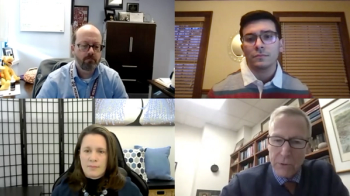
A roundtable discussion featuring Scott Perry, MD, Orrin Devinsky, MD, and Tracy Salazar, PhD, covers the logistics behind a seizure action plan and why its necessary to develop one.
The company also plans on submitting an application to a PDAC contractor for the mmRNA appliance to be added to the Center for Medicare and Medicaid Services’ list of approved sleep apnea appliances.

The SARS-CoV-2 infection was observed in pluripotent stem cells, as well as APOE4 and APOE3 neurons and astrocytes.

Wildon Farwell, MD, MPH, shed some light on the ongoing phase 4 trial and what clinical insights might be gleaned from the data.


Here's what is coming soon to NeurologyLive.
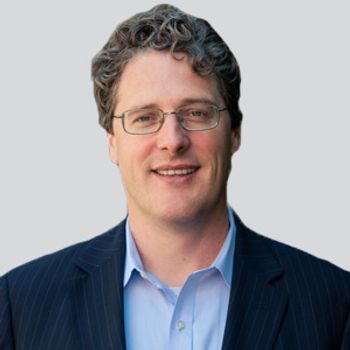
The director of the Massachusetts General Hospital ALS Care Center discussed the greatest needs in ALS research and why focusing on genetics can play a big role into understanding the disease course.

The chief medical officer at SanBio discussed how the investigational agent SB623 is being studied in TBI and stroke, with future planned studies in Alzheimer disease.

Study results suggest that fewer than 10% of the more than 2000 migraine episodes analyzed were associated with increased levels of perceived stress.

Study data showed that 43% of patients with obstructive sleep apnea were referred to sleep specialist physicians for ongoing management by a primary care provider.
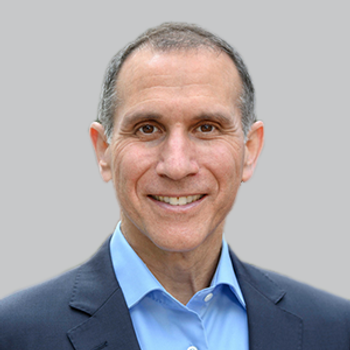
The chief scientific officer of QurAlis discussed how QRA-244 is more specific and potent than retigabine, a treatment currently in clinical studies.
Neurology News Network for the week ending February 6, 2021.
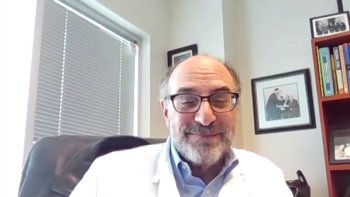
The director of the Parkinson’s Disease and Movement Disorder Program at Emory University School of Medicine shared his perspective on the research and development of Parkinson therapies.
Take 5 minutes to catch up on NeurologyLive's highlights from the week ending February 5, 2021.