
MS and Demyelinating Disorders
Latest News

Advertisement
Latest Videos







CME Content








Advertisement
More News
A switch to a second-line drug in a patient receiving first-line therapies likely will be effective at decreasing disease activity.
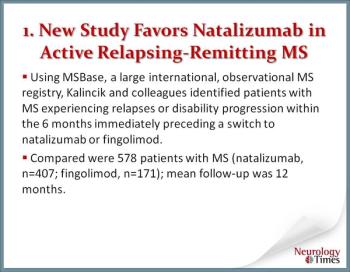
Three brand new studies shed light on use of natalizumab in relapsing-remitting multiple sclerosis.
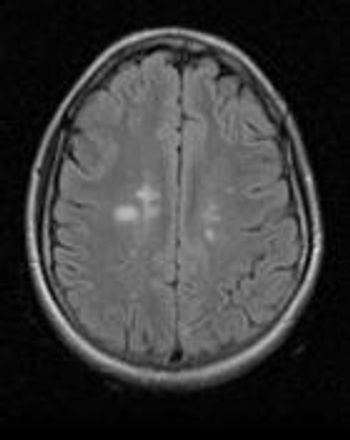
Do you have a patient with "radiologically isolated syndrome" -- and, if so, what do you tell your patient?

An FDA-approved drug for high blood pressure alleviates clinical symptoms of MS in mice, showing great promise for humans.
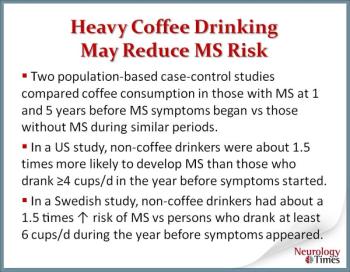
Highlights of recent findings about multiple sclerosis are summarized in this slide show.

This treatment may be superior to current treatment for patients with severe multiple sclerosis that is not responding well to standard treatments.

A new study indicates that infection with Helicobacter pylori might lower the risk of multiple sclerosis, at least in women. Pharmaceutical products could provide a novel means of treatment.

The risk of progressive multifocal leukoencephalopathy in patients receiving Tysabri for MS is a concern about this otherwise extremely effective therapy.
HDIT/HCT could induce sustained remission and neurological improvements in patients with multiple sclerosis.

No evidence of disease activity (NEDA) is a new concept developing in MS. The field is beginning to ask how well the new treatments are doing and whether can we ultimately shut down the disease.
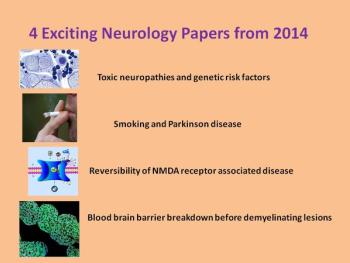
What happens before the demyelinating lesions of MS appear? Does smoking confer protection against Parkinson disease? How is NMDA receptor-associated disease reversed? Here are 4 fine papers from 2014 that set out to answer these questions.

Get to the root of the latest research findings on nervous system disorders and test your brainpower with this quick 5-question quiz.

Approved for patients with relapsing forms of MS, the drug generally should be reserved for those who have had an inadequate response to 2 or more drugs indicated for MS treatment.

As more treatments become available, patients will have more preferences and will play a more prominent role in directing choices.

Determining who is at risk for MS remains difficult, and symptoms may take time to develop even in patients who already have some destroyed myelin. MRI may help.
A new study provides hope for MS treatment with IGF-1, which could ultimately halt the attack of T effector cells on myelin, thereby stopping disease progression.

New study findings do not suggest a need for a change in vaccine policy, but even a small increased risk could have an effect on public health.
Studies suggest that acupuncture can improve MS-related symptoms, but poor design makes it difficult to draw robust conclusions.
This, the least common MS disease course, carries the worst prognosis. Treatments are urgently needed to prevent or delay the rapid disease progression.
Childhood obesity is another potentially modifiable factor to reduce the risk of multiple sclerosis.
If an anti-NMDAR patient has evidence of demyelination on MRI, look for other antibodies that may complicate the picture.

Five recent studies on multiple sclerosis offer new insights: the take-home points are featured in this slide show.
At the ACTRIMS/ECTRIMS conference, one has the impression that the science of multiple sclerosis is moving forward at an unprecedented rapid rate. Live from the floor . . .

Hospitalization rates have declined dramatically in the MS population but remain higher than in the general population. That may be because of the availability of MS disease-modifying treatments.
Information on causes of death for patients with MS is limited, but these researchers came up with some of the underlying causes.
Advertisement
Advertisement
Trending on NeurologyLive - Clinical Neurology News and Neurology Expert Insights
1
FDA Grants Fast Track Designation to Remlifanserin for Alzheimer Disease Psychosis
2
Solriamfetol Improves Wakefulness and Sleepiness in Chinese Patients With Obstructive Sleep Apnea
3
Case Report Raises Questions About Cardiac Microdystrophin Expression, Safety Monitoring With Duchenne Gene Therapy
4
Real-World Experience With Efgartigimod in CIDP
5