
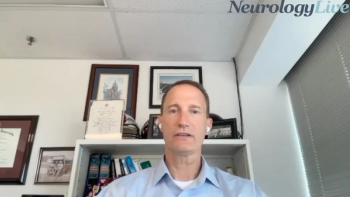
The Edward F. and Barbara A. Bell Family Endowed Chair at the Cleveland Clinic provided an overview of the Cleveland Clinic Virtual Reality Shopping platform, a virtual reality tool for Parkinson disease. [WATCH TIME: 5 minutes]
The Edward F. and Barbara A. Bell Family Endowed Chair at the Cleveland Clinic provided an overview of the Cleveland Clinic Virtual Reality Shopping platform, a virtual reality tool for Parkinson disease. [WATCH TIME: 5 minutes]

Here's some of what is coming soon to NeurologyLive® this week.

After failing to show statistical significance in a cohort of children, teriflunomide, the disease-modifying medication observed in the analysis, had compelling evidence to suggest it was efficacious in that age group following the Bayesian approach to analysis.

The chief medical officer and cofounder of Linus Health discussed how changes in voice may help serve as early indicators for late-life cognitive deficits. [WATCH TIME: 3 minutes]
Test your neurology knowledge with NeurologyLive®'s weekly quiz series, featuring questions on a variety of clinical and historical neurology topics. This week's topic is multiple sclerosis.

Vesna Garovic, MD, PhD, chair of the nephrology division at Mayo Clinic, discussed the appropriate reaction to data suggesting late-life elevated inflammation and neurovascular damage from severe preeclampsia.
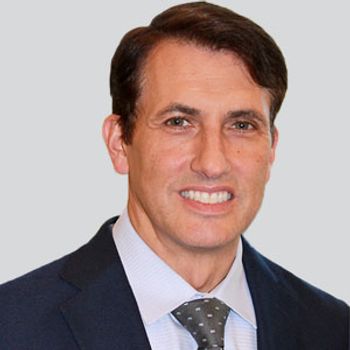
The field of Alzheimer disease has entered a new era of earlier detection, creating an opportunity to redefine treatment and the clinical care of patients.
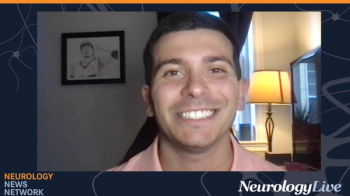
Neurology News Network for the week of August 13, 2022. [WATCH TIME: 4 minutes]
Take 5 minutes to catch up on NeurologyLive®'s highlights from the week ending August 12, 2022.

The deaths, occurring shortly after treatment infusion, were because of acute liver injury, which is a known risk associated with the Novartis gene therapy.
When combing all 26 studies irrespective of methods, the lowest age-specific divergence in incidence was seen in 3 Southern European studies, and the most pronounced divergence in North American studies.

The associate professor of neuropsychology at the University of Miami Miller School of Medicine provided insight on how persistent impairments seen on a cognitive screening tool may differentiate cognitive status. [WATCH TIME: 6 minutes]
Mind Moments®, a podcast from NeurologyLive®, brings you an exclusive interview with Olwen C. Murphy, MBBCh; and Matthew R. Vogt, MD, PhD. [LISTEN TIME: 40 minutes]

The chair of the nephrology division at Mayo Clinic discussed the major questions surrounding preeclampsia and its long-term effects, as well as whether new findings change the way clinicians treat patients with the condition. [WATCH TIME: 4 minutes]

When each variable was entered into the first step of hierarchical linear regression analysis, perceived stress explained more than 40% of the variance in depressive symptoms, followed by felt stigma, at about 20%.
The assistant director of computational biology at Stanford University discussed where the Alzheimer disease community stands on gene therapies that target APOE, and whether missense variants will play a role. [WATCH TIME: 4 minutes]
People with epilepsy were less involved than controls in activities considered risky, such as driving and doing household chores, which may have suggested reduced social independence and legal limitations for driving.

Valine at position 11, the most significantly associated amino acid, was found in 26% of controls and 22% of individuals with Parkinson disease.
The professor of psychiatry and cell biology at NYU Langone discussed how validation of lysosomal autophagy will only simplify the understanding of the root causes of Alzheimer disease. [WATCH TIME: 4 minutes]
Investigators identified increased levels of neurofilament light that corresponded significantly with patients’ diabetic status, even after adjustment for age, BMI, and vascular risk factors.
The director of the Women’s Alzheimer’s Movement Prevention Center at Cleveland Clinic provided insight on data presented at AAIC 2022 that evaluated the interaction effect of sex and diagnosis on functional connectivity in various cognitive stages. [WATCH TIME: 3 minutes]

The chair of the nephrology division at Mayo Clinic provided context on new findings on the risks of preeclampsia, a hypertensive disorder, and elevated levels of neuroinflammation and neurovascular damage.

After Reata Pharmaceuticals submitted an analysis from the MOXIe extension study of the investigational agent as part of the NDA submission, the FDA extended the PDUFA date to February 2023.

The coauthors of a study assessing costs associated with unused disease-modifying therapies shared their insight into the extended effects of unused treatments in MS. [WATCH TIME: 14 minutes]

In a phase 2 trial, pepinemab significantly improved metabolic activity as detected by FDG-PET in the majority of brain regions examined, as well as correlated with changes in cognition across both Huntington disease and Alzheimer disease.

The impact of retinal thinning was higher when using GCIPL rather than pRNFL thinning as it explained more of the variance in relapse remission.

The medical student at Nova Southeastern University provided insight on a new innovative tool called the Cognitive Stress Test that can help distinguish different cognitive states for older adults. [WATCH TIME: 6 minutes]

Increased posterior cingulate cortex activation to sad faces in the long-delay diagnostic group were associated with worse symptoms of depression, as expressed by Beck Depression Inventory scores.

Lawrence Newman, MD, offered his insight into the findings of a survey conducted by the American Headache Foundation that identified correlations between migraine and mental health conditions.
The professor of psychiatry and cell biology at NYU Langone pleaded his case for why the Alzheimer community should begin to turn to other drug development strategies, including the relatively young phenomenon of autophagy. [WATCH TIME: 3 minutes]