

Episode 21 of the AUPN Leadership Minute features Alissa Willis, MD, of University of Mississippi Medical Center; and Michael Dobbs, MD, MHCM, of University of Texas at Rio Grand Valley. [WATCH TIME: 5 minutes]
Episode 21 of the AUPN Leadership Minute features Alissa Willis, MD, of University of Mississippi Medical Center; and Michael Dobbs, MD, MHCM, of University of Texas at Rio Grand Valley. [WATCH TIME: 5 minutes]

Following the positive phase 3 findings, UCB plans to file regulatory submissions for both zilucoplan and rozanolixizumab later this year.
The director of the Division of Movement Disorders at the USC Keck School of Medicine discussed the efforts needed to validate tears as a biomarker in patients who don’t present with typical Parkinson disease. [WATCH TIME: 4 minutes]
Those using riluzole concomitantly experienced even greater benefit from methylcobalamin, as demonstrated by increased differences in scores on ALSFRS-R vs placebo, suggesting the combination may be effective in ALS.
The biologics license application includes data from the pivotal phase 2b proof-of-concept trial, its open-label extension, and the ongoing phase 3 Clarity AD study, which includes almost 1800 participants.
The assistant professor of neurology and director of the Parkinson’s Disease & Movement Disorder Program at Global Neurosciences Institute discussed the need to understand the chemical markers that trigger nonmotor symptoms of Parkinson disease. [WATCH TIME: 3 minutes]
Both fenfluramine dose groups showed significant decreases in generalized tonic-clonic seizures, whereas those on placebo showed worsening of their condition.

Across a 58-patient cohort, ravulizumab’s safety and tolerability were consistent with previous clinical studies, with most patients opting to enter a long-term extension period following the study.

Baseline cognition and function were highly correlated in those with mixed Alzheimer and Lewy body dementia pathologies, but not in pure Alzheimer disease nor pure dementia with Lewy bodies.
The director of the Division of Movement Disorders at the USC Keck School of Medicine provided insight on the next steps in how we can expand on tears as a valuable biomarker for neurodegenerative diseases. [WATCH TIME: 4 minutes]

Here's what is coming soon to NeurologyLive®.
The chief executive officer of the Child Neurology Foundation discussed the need to change conversations about children living with neurological disorders and creating more healthy environments for them. [WATCH TIME: 4 minutes]

The director of the pediatric epilepsy program at Boston Children’s Health Physicians shared his expertise with the challenges associated with diagnosing LGS, how the REST-LGS tool may help, and the need to collect more data.
Test your neurology knowledge with NeurologyLive®'s weekly quiz series, featuring questions on a variety of clinical and historical neurology topics. This week's topic is neuromuscular disorders.

The combination of APOE ε4 carrier status with elevated blood pressure variability represented the fastest increase in phosphorylated tau levels over time.
In a prior phase 1b/2 study, BXCL501 demonstrated statistically significant reductions in agitation measures with both the 30- and 60-mcg doses as measured by multiple scales with no severe or serious adverse events.

The early-stage clinical trial will include 40 healthy volunteers to evaluate the safety and immune response of an investigational EBV gp350-Ferritin nanoparticle vaccine with a saponin-based Matrix-M adjuvant.
Take 5 minutes to catch up on NeurologyLive®'s highlights from the week ending May 6, 2022.
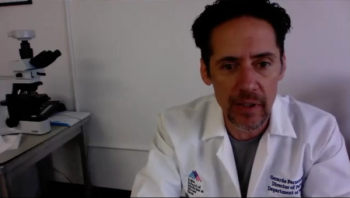
The neuropathologist at Mount Sinai and chief science officer of Precise Dx pairing spoke to the role of artificial intelligence in the diagnosis of diseases from peripheral tissue biopsies and its ability to improve neuropathology. [WATCH TIME: 8 minutes]

In latitudes lower than 40°, the underlying environmental determinants of MS severity reached saturation and a ceiling effect was observed, with no further systematic shift in the disease severity.
Mind Moments®, a podcast from NeurologyLive®, brings you an exclusive interview with Jessica Ailani, MD. [LISTEN TIME: 35 minutes]
DSP-0187, an orexin-2 receptor agonist, adds to Jazz’s portfolio of sleep disorder therapies, expanding it into a new medicine class. The molecule will be referred to as JZP441 by Jazz.
The neuropathologist at Mount Sinai and chief science officer of Precise Dx pairing shared background information on the artificial intelligence’s ability to improve the diagnosis of Parkinson disease from peripheral tissue biopsies. [WATCH TIME: 9 minutes]

The findings in Alzheimer disease further elucidated the safety profile of AMX0035, as treatment emergent adverse events in the PEGASUS trial appeared to be largely disease driven.

The president of the National Headache Foundation discussed whether switching or continuing preventive medications has a benefit in patients who have chronic migraine with medication overuse. [WATCH TIME: 4 minutes]

The Parkinson’s Foundation will now partner with Morehouse School of Medicine, aiming to make the study and genetic testing more accessible for Black and African American persons in Atlanta.
Cerebrospinal fluid samples tested in a large cohort of patients at least 50 years of age with either mild cognitive impairment or Alzheimer disease showed high correlations between the Lumipulse G ß-Amyloid Ratio and PET status.
Catch up on any of the neurology news headlines you may have missed over the course of the last month, compiled all into one place by the NeurologyLive® team.

The neurologist at Christus St. Vincent Health System detailed the areas of research dedicated to understanding more about neuropsychiatric symptoms of Parkinson disease and the root causes of the disease. [WATCH TIME: 3 minutes]
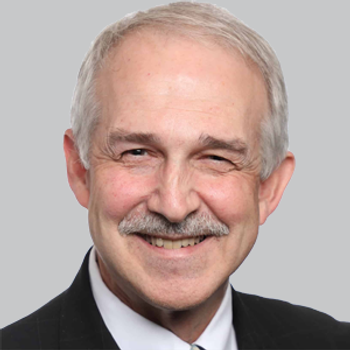
Vincent Martin, MD, president of the National Headache Foundation, provided insight on the ongoing challenges of treatment optimization for patients with chronic migraine.