
Explore today’s DMD treatment toolkit—from steroids and givinostat to gene therapy and exon skipping—plus dosing debates shaping care.
Explore today’s DMD treatment toolkit—from steroids and givinostat to gene therapy and exon skipping—plus dosing debates shaping care.
A teen with Duchenne shows how exon-skipping and steroids shape care, while clinicians stress realistic expectations amid varied progression.
In this episode, 'Narcolepsy Treatment Considerations in Pediatric Patients', the experts explore the pharmacologic treatment of narcolepsy in pediatric patients, beginning with a review of FDA-approved options for children. The expert panel notes that the oxybate class, including sodium oxybate, low-sodium oxybate, and once-nightly oxybate, carries approval for excessive daytime sleepiness and cataplexy in patients seven and older, while pitolisant is approved for ages six and up for both indications, including a recently added cataplexy indication. The expert panel clarifies that traditional stimulants and solriamfetol have not been specifically studied or approved for cataplexy treatment.

The chief research officer of the Muscular Dystrophy Association spoke on the FDA's approval of a high-dose regimen of nusinersen and how it fits into an increasingly complex treatment landscape. [WATCH TIME: 11 minutes]
Learn how DMD clinics coordinate neurology, cardio, pulm, rehab and mental health—without overwhelming visits—using nurse coordinators and team huddles.
Clinicians detail modern Duchenne care: essential multidisciplinary teams, access workarounds, and family-centered visits as therapies accelerate.
This episode, titled 'Evaluating Pitolisant and Other Pharmacologic Treatment Options for Narcolepsy,' features panelists discussing the goals of narcolepsy management broadly, stressing that successful therapy extends beyond reducing excessive daytime sleepiness to include addressing cataplexy, hypnagogic hallucinations, sleep paralysis, and the psychological, social, and occupational consequences of the disease.
A neuroimmunology fellow at the Cleveland Clinic shared her experience attending the 2026 ACTRIMS Forum, specifically focusing on the late-breaking data presented in multiple sclerosis.
The director of the Neurology Residency Program at the Marcus Neuroscience Institute discussed the importance of early recognition of invisible symptoms in comprehensive multiple sclerosis care. [WATCH TIME: 9 minutes]
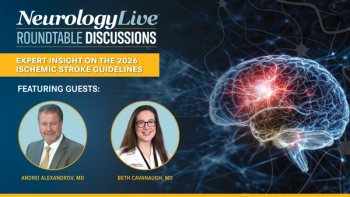
Experts discuss key takeaways in the latest ischemic stroke guidelines, including the transition toward tenecteplase, advances in multimodal imaging, and growing attention to pediatric stroke care. [WATCH TIME: 3 minutes]

Raj Rajaraman, MD, MS, discussed the comprehensive, team-based approach to managing CDD, highlighting the complex interplay of seizures, developmental delays, cortical visual impairment, gastrointestinal issues, and orthopedic concerns.
Raj Rajaraman, MD, MS, emphasized that CDKL5 diagnosis relies on early genetic testing rather than EEG findings, given the absence of a consistent electrographic signature.
Experts debate DEVO and MEVO interventions, exploring emerging approaches in stroke care, the role of advanced imaging, and how evolving evidence may shape treatment decisions. [WATCH TIME: 2 minutes]

Neurology News Network for the week ending April 4, 2026. [WATCH TIME: 5 minutes]
Experts discuss the evolving philosophy of stroke care, highlighting the importance of rapid recognition, advanced imaging, and expanding treatment pathways for patients with suspected stroke. [WATCH TIME: 4 minutes]
A neuroimmunology fellow at the Cleveland Clinic reflected on the 2026 ACTRIMS Forum, highlighting key takeaways in multiple sclerosis research presented in the program. [WATCH TIME: 6 minutes]
Experts discuss how updated stroke guidelines introduce new considerations for pediatric stroke care, emphasizing improved recognition, specialized expertise, and collaboration between pediatric and adult stroke centers. [WATCH TIME: 5 minutes]
A forward-looking discussion on how real-world experience is shaping the use of ublituximab, including patient selection, infusion logistics, monitoring strategies, and emerging considerations such as subcutaneous development and long-term safety management.
A comprehensive review of long-term safety findings with ublituximab, including infection risk, immunoglobulin trends, and tolerability over 5 years, with context on how these data inform ongoing treatment decisions in relapsing MS.
An in-depth analysis of 5-year ULTIMATE open-label extension data, highlighting sustained relapse reduction, disability outcomes, and the long-term impact of early ublituximab initiation in relapsing MS.
In 'Navigating Diagnostic Challenges in Narcolepsy,' our panel delves into the practical challenges of diagnosing narcolepsy in clinical settings, opening with a discussion of supplementary tools such as actigraphy, sleep diaries, and standardized scales including the Pittsburgh Sleep Quality Index.
In this episode, 'Narcolepsy Comorbidities, Quality of Life, and Risk Factors', the experts explore the far-reaching impact of narcolepsy beyond sleepiness, examining how sleep-wake instability undermines the ability to reliably show up for work, school, and relationships, often resulting in incomplete education, job loss, and chronic feelings of inadequacy. The persistence of sleepiness, unlike the restorative relief healthy individuals experience after rest, distinguishes narcolepsy as a fundamentally different and more burdensome condition.
Neuroimmunologist Bruce Cree, MD, provides a detailed overview of ublituximab as an anti-CD20 therapy, including its mechanism of B-cell depletion, differentiation from other agents in the class, and the clinical trial pathway that led to its approval in relapsing MS.
The professor of neurology at Mayo Clinic spoke about the current state of biomarker research in MSA. [WATCH TIME: 8 minutes]
The director of the Neurology Residency Program at the Marcus Neuroscience Institute detailed the importance of tailoring treatment to patients with multiple sclerosis. [WATCH TIME: 5 minutes]
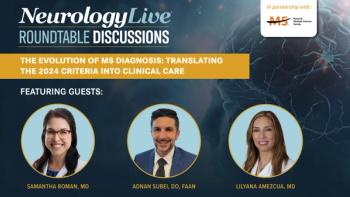
A group of neuroimmunologists discuss how the updated McDonald criteria will shape neurologist training and highlight key barriers to implementation, including imaging access, resource limitations, and knowledge dissemination.
Panelists review emerging real-world and ECTRIMS data demonstrating that the updated McDonald criteria improve earlier MS diagnosis while maintaining diagnostic accuracy across diverse clinical settings.
Experts discuss how the updated McDonald criteria redefine radiologically isolated syndrome and explore the clinical, imaging, and access challenges of diagnosing and treating MS before symptom onset.

Neurology News Network for the week ending March 28, 2026. [WATCH TIME: 4 minutes]

Experts discuss the optimistic future of MS treatment, emphasizing early diagnosis, consistent care, and a partnership approach for improved patient outcomes.