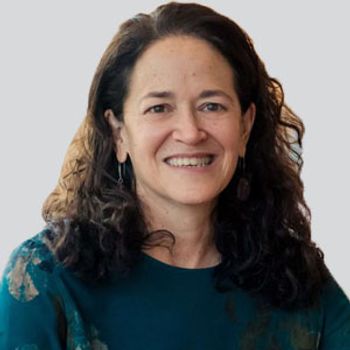

Kathy Zackowski, PhD, OTR, associate vice president of research at the National MS Society, provided insight on the ongoing efforts to treat progressive MS, including strategies to develop remyelinating treatments.

Marco Meglio, Assistant Managing Editor for NeurologyLive, has been with the team since October 2019. Follow him on Twitter @marcomeglio1 or email him at [email protected]

Kathy Zackowski, PhD, OTR, associate vice president of research at the National MS Society, provided insight on the ongoing efforts to treat progressive MS, including strategies to develop remyelinating treatments.

On multiple phase 3 trials, treatment with STS101 resulted in numerical differences on primary outcome measures of pain freedom and freedom from the most bothersome symptoms.

Pitolisant, a therapy approved for patients with narcolepsy, is currently being assessed in 200 individuals with idiopathic hypersomnia, with change in excessive daytime sleepiness as the primary outcome.

Over a 72-week treatment period, vatiquinone showed significant impacts on bulbar and upright stability subscales of the modified Friedreich Ataxia Rating Scale score.

Investigators observed similar rates of intracranial hemorrhage for patients with minor stroke on a dual thrombolytic treatment vs those who received alteplase alone.

In a 6-month trial, more than 85% of adults on CBD showed significant reduction in the number of monthly seizures, suggesting this treatment may be an effective adjuvant option.

Thirty days after treatment, a primary-outcome event occurred in 2.9% of those in the early-treatment group and 4.1% of those in the later-treatment group.

Using trials selected by amyloid positivity, amyloid-targeting therapies had slightly greater efficacy in APOE ε4 carriers than in noncarriers.

Robust, sustained reductions in key pharmacodynamic biomarker were observed; however, this did not lead to functional benefits on any of the scales used in the trial.

Submitted under the accelerated approval pathway, if approved, SRP-9001 would become the first marketed gene therapy specific for Duchenne muscular dystrophy.

The senior associate consultant in the Department of Neurology at Mayo Clinic provided insight on an early feasibility study on the clinical impact of microburst vagus nerve stimulation in patients with drug-resistant epilepsy.

Females with episodic migraine had higher interictal CGRP concentrations in plasma and the tear fluid during menstruation than females without migraine.

Clinically relevant effect sizes were observed, with those in the highest Dietary Inflammatory Index quartile having relapse risk 2.45 times higher than those in the lowest quartile.

Findings showed that greater average daily step count was significantly correlated with greater C2-C3 spinal cord gray matter areas, total cord area, and cortical gray matter volume.

Asudexian is currently being assessed in a large-scale phase 3 program expected to comprise more than 27,000 patients with atrial fibrillation across over 40 countries.

To date, in the largest series of patients treated with lacosamide after first-line treatment failure, pain relief was achieved in 66% of patients, with a relatively low proportion of mild adverse events.

The phase 1/2 MARINA trial assessed the activity of AOC 1001 across key biomarkers, including spliceopathy, an important biomarker for myotonic dystrophy type 1, and knockdown of DMPK mRNA.

Treatment with valbenazine at doses of up to 80 mg once per day significantly improved chorea, as demonstrated by the mean change in UHDRS Total Maximal Chorea scores.

Mind Moments®, a podcast from NeurologyLive®, brings you an exclusive interview with James Berry, MD, PhD. [LISTEN TIME: 14 minutes]

Over a 4-month treatment period, the agent was well tolerated, with patients showing no significant changes in ADAS-Cog or CDR-SB scores, indicating no cognitive decline.

Comprised of the recharge-free Proclaim SCS family and the rechargeable Eterna SCS platform, the approval for Abbott’s spinal cord stimulation system was backed by the large-scale, DISTINCT study.

Findings from the 12-week study showed a significant decrease in total number of new gadolinium-enhancing lesions in patients with relapsing MS on fenebrutinib relative to placebo.

Following thymectomy, more than 80% of patients with myasthenia gravis showed symptom improvement, as demonstrated by changes in Myasthenia Gravis Foundation of America scores.

The director of the Sleep Disorders Center and staff in the Epilepsy Center at Cleveland Clinic provided perspective on the current state of sleep and epilepsy research, including the role of postical generalized EEG suppression as a biomarker for SUDEP.

Improvements seen in patients with CDD during the 12-week maintenance period of the study were similar to that observed in a recent trial of ganaxolone, the first FDA-approved therapy for CDD.

Regardless of highly different demographics and smaller sample size, the association between amyloid in the brain and plasma was influenced by overall vascular risk score, and was only consistently observed in APOE ɛ4 carriers.

Timothy A. Leichliter, MD, a neurologist at Allegheny Health Network, provided context on the institution’s boxing program for Parkinson disease, and the need for patients to remain active.

Participants with rheumatoid arthritis had a 1.74-fold higher risk of PD compared with those without, raising importance of an elevated risk.

Positive associations between preexisting obstructive sleep apnea and probable post-acute sequelae among adults were attenuated but remained significant after adjusting for other comorbidities.

The FDA is set to make a final decision later this month and, if approved, SRP-9001 would be the first gene therapy specific to treat Duchenne muscular dystrophy.